
As a stationery brand, we are always curious how and what people use our stationery goods for. With this blog series, focusing on the hands at "work" and beyond, we ask five questions about the usage and meaning of the stationery tools to our friends in Los Angeles.
For our fifteenth post, we visited a LA based artist, Wyatt Conlon at his Chinatown studio.
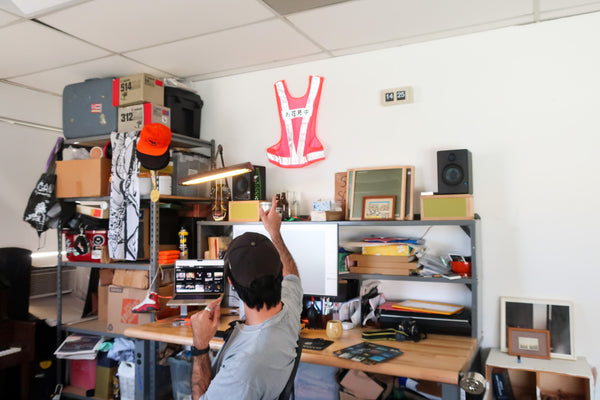
Q1. What do you do with Dermatograph colored pencils?
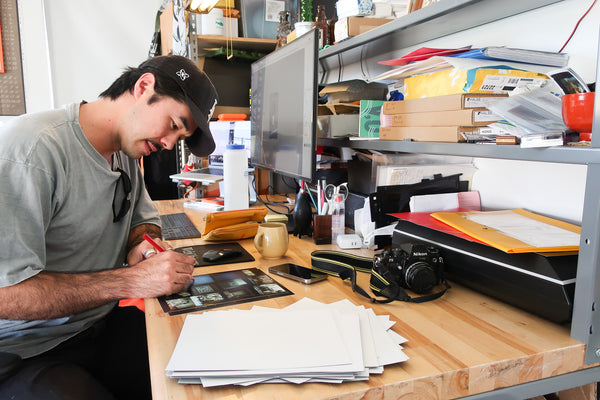
For marking up those contact sheets. Also for keeping a record on films.

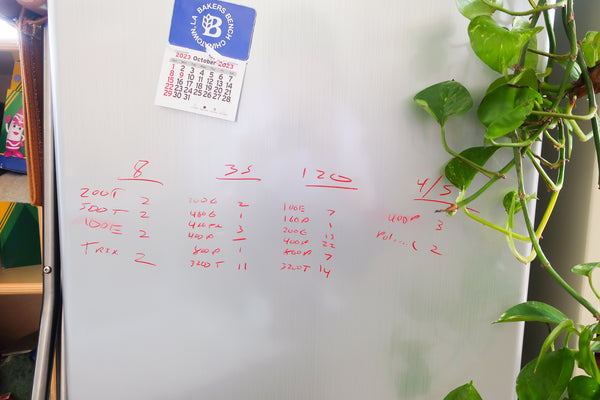
Wyatt keeps a record of his fridge film count with the dermatograph pencil.

Q2. In our technology driven world, what does it mean to make things by your hand to you?
Technology can be useful but is a slippery slope. The next this, the next that, blahh. I like cutting my own garlic, I like coincidences. Technology can't cut garlic like I can, technology is not coincidental. 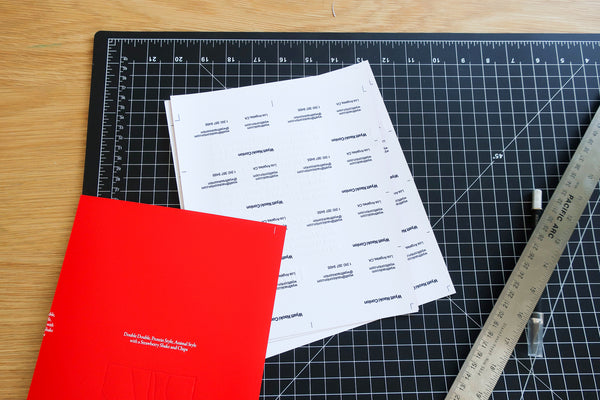

Wyatt uses the penco Melamine Tray in small for his incense tray. The incense holder is from Mainichi Koh & the incense is the most natural incense you could find - Baba Suishaba's cedar incense.
Q3. Pencils or Mechanical Pencils?
Pencils! If you sharpen it fast enough you get to smell the slightly burning pencil shavings.


A piano Wyatt acquired from the house in West Adams where his grandparents met (complicated but worth it story) in his studio. He attempts to play it in the morning.
Q4. What’s in your pen case, if you don't use a pen case, how do you organize and store your stationeries?
Yoiko no Odogubako, LION Double Zipper Pen Case! Fits my external HD, works for cord management and all my pen/pencil needs.
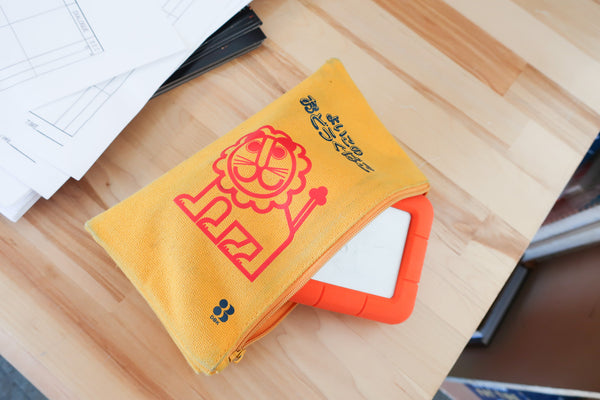

* Available only at our DTLA store location.
Q5. What is your most favorite stationery?
Muji Unruled Japanese Paperback! Been using them since 2015 and bought 20 so I didn't have to change, still got 13 left.

Wyatt's "storyboard" notes – he painstakingly manipulated the original storyboards from 1988 animated film, Akira.

Wyatt's grandfather's clock which is in his recent book, Double Double, Protein Style, Animal Style with a Strawberry Shake and Chips
__
Wyatt Conlon is an image-based artist who uses found and taken sources of imagery to analyze his ancestral history, collective memory and the act of retrospection. He is one of three members of The Fulcrum Press, an independent publisher and contemporary gallery based in Los Angeles, California exploring the interplay between photography and other media.
Conlon's most recent book, Double Double, Protein Style, Animal Style with a Strawberry Shake and Chips, weaves multiple timelines, from the minutes of his grandfather’s waking hours to a photographic archive of his entire life, allowing the viewer to observe and control the subject's passing time. Through systematic collaging, Conlon creates instantaneous moments of then and now and compositions of coincidences that capture life's intimacies. Ultimately, questioning the truth of one's memory and act of recollection.
https://wyattconlon.com/


